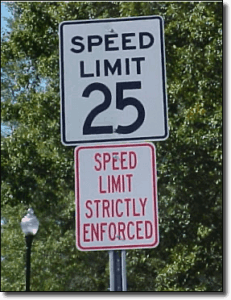
 Speed: The Rules Behind How Fast You Can Go
Driving fast isn’t just about staying under the speed limit — it’s about knowing when to slow down. In California, the law puts safety first, and that means adjusting your speed based on what’s happening around you — not just the number on a sign.
The Basic Speed Law (California Vehicle Code §22350) says you must never drive faster than is safe for the conditions, even if that speed is under the posted limit.
That means your speed must reflect:
VC §22350 – Basic Speed Law:
“No person shall drive a vehicle upon a highway at a speed greater than is reasonable or prudent having due regard for weather, visibility, the traffic on, and the surface and width of, the highway…”
You can legally get a speeding ticket even if you’re under the limit — if you’re going too fast for the conditions.
Posted speed limits are the maximum speed allowed in ideal conditions. If you’re driving at night or in poor weather, you’ll often need to go slower.
Here are some standard limits unless otherwise posted:
These limits are for ideal conditions — not a guarantee of safety.
While speeding is dangerous, driving too slowly can also be illegal. If you’re blocking traffic or creating a hazard by moving well under the speed limit — especially on a highway — you can be cited.
You’re expected to recognize these special zones even without a police officer telling you — it’s your responsibility as a driver.
Quick Recap
 Cooperative Driving
You’re not the only one out there. From city streets to freeways, you’re sharing the road with all kinds of people — in cars, on bikes, on foot, and behind the wheel of everything from compact cars to massive semis. Safe driving depends on cooperation, not competition.
Traffic laws lay the foundation for order, but not every situation is covered by a rule. That’s where courtesy fills the gap. When drivers make thoughtful choices — like letting someone merge or choosing patience over frustration — the whole system runs more safely and efficiently.
1. Be Patient
2. Communicate Clearly
3. Adapt to What’s Happening Around You
4. Keep Traffic Flowing
 Teen Drivers and Crash Risk
Teen drivers represent one of the highest-risk groups on the road. Even though they drive less overall than adults, their crash rates — especially fatal crashes — are significantly higher. Knowing the facts isn’t just about passing a test — it’s about understanding what’s at stake when you take the wheel.
According to national safety data, the fatal crash rate for 16–19-year-olds is nearly three times higher than it is for drivers 20 and older. The risk is highest for new drivers aged 16–17 — right when most teens in California are getting their first permits or licenses.
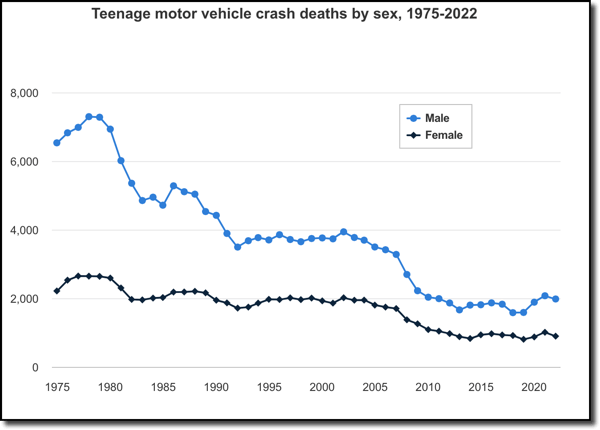
In 2022, 2,883 teens aged 13–19 died in vehicle crashes. That’s a huge improvement from 1975, but still far too high. Two out of three of those teens were male. And while both male and female teen deaths have declined since the 1970s, teen boys continue to be involved in fatal crashes at a higher rate.
The problem isn’t just age — it’s inexperience and risk-taking behavior.
These California-specific stats from the DMV highlight the risks:
In California and across the country, graduated driver licensing (GDL) laws are in place to ease teens into full driving privileges. These rules — such as passenger limits, curfews, and mandatory supervised driving — have been shown to dramatically reduce fatal crash rates in states that enforce them consistently.
 Driving safely doesn’t just depend on knowing the rules or handling the car — it depends on your mental and physical condition every time you get behind the wheel. A distracted, tired, or emotionally unstable driver is just as dangerous as a reckless one.
Cars are machines — but drivers are human. That means your vision, hearing, reaction time, mood, focus, and alertness all play a role in your safety on the road.
If you’re sick, tired, distracted, or emotionally upset, your risk of crashing goes up — sometimes without you even realizing it.
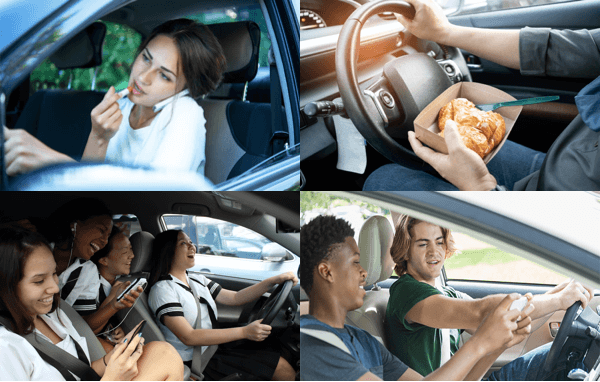
Distraction is one of the most common causes of collisions, especially for young and inexperienced drivers. Even a moment of inattention can have serious consequences.
Common Distractions:
How to Reduce Distraction
Using a phone while driving is one of the most dangerous — and common — distractions. California has strict laws in place to reduce the risk.
What the Law Says:
Hands-Free Devices Must Be:
Using voice-activated or one-touch controls is allowed, but texting, scrolling, or holding the phone is not.
 Driving Under the Influence (DUI)
Drinking or using drugs and then getting behind the wheel is one of the most dangerous — and heavily enforced — violations in California. Whether you’re under 21 or a fully licensed adult, driving under the influence puts lives at risk, including your own.
California law strictly prohibits:
You’re considered “under the influence” if your ability to drive safely is impaired — not just if your BAC hits a certain number.
It’s illegal for the driver or any passenger to:
Exception:
If you’re 21 or older, an open container may be stored in the trunk — never in the cabin or glove compartment.
If you’re lawfully arrested for DUI in California, you’re legally required to take a breath or blood test to measure your BAC. Refusing the test results in an automatic license suspension — even if you aren’t convicted of DUI.
Urine tests are only used when blood or breath tests aren’t available or medically advisable.
California has zero tolerance for underage drinking and driving:
Even one drink can be enough to trigger legal consequences if you’re under 21.
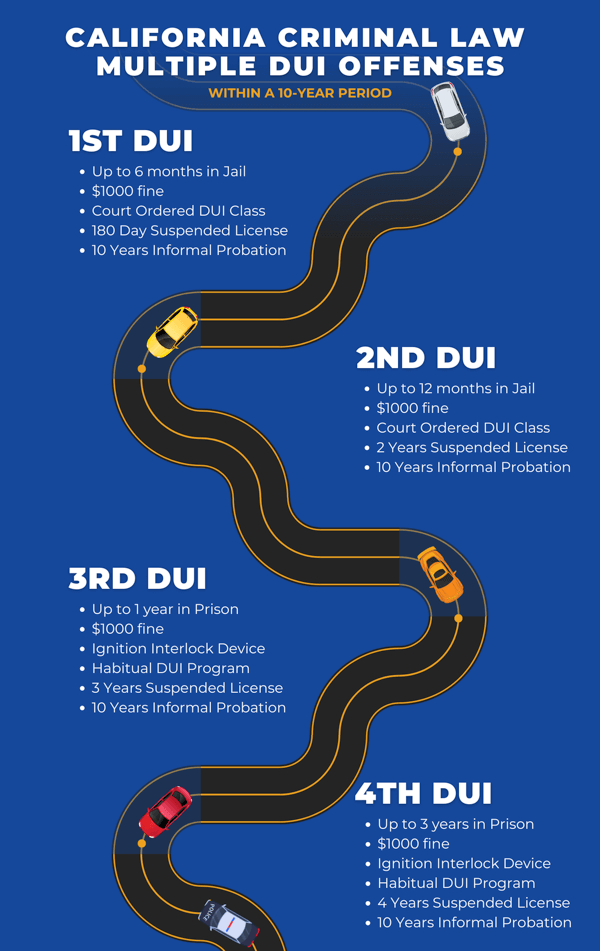
DUI consequences go far beyond fines. Even a first offense may include:
And if you’re under 21, your license can be suspended even if you weren’t legally intoxicated under adult standards.
If someone on the road is swerving, speeding, braking erratically, or driving dangerously:
Your call could prevent a serious or fatal crash.
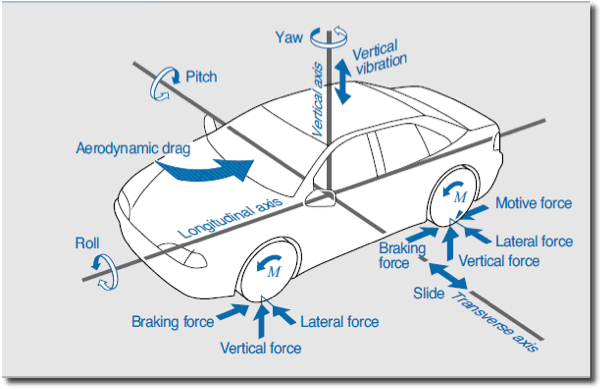 Driving isn’t just about skill — it’s about science. Every time you press the gas, hit the brakes, or turn the wheel, your vehicle is affected by natural forces that apply to all moving objects. Understanding these forces helps you stay in control and avoid preventable accidents.
Here are the key physical forces that influence how your vehicle moves:
1. Gravity
Gravity pulls everything toward the earth — including your car. It affects:
Understanding gravity helps you adjust your driving on inclines and avoid overheating your brakes or losing control.
2. Inertia
Inertia is the tendency of an object in motion to stay in motion — or stay at rest — unless acted on by an outside force. In driving:
3. Momentum
Momentum is the force that keeps your vehicle moving once it’s in motion. The heavier your car and the faster you’re going, the more momentum you have — and the longer it takes to stop. This is why following distance and speed control matter.
4. Kinetic and Potential Energy
Kinetic energy increases exponentially with speed. Doubling your speed means four times the stopping distance.
5. Friction
Friction is what allows your tires to grip the road. It’s essential for:
Road conditions (wet, icy, sandy) reduce friction — which is why your car slides more easily on those surfaces. Bald tires or overinflated ones also reduce friction.
6. Centrifugal Force
When you go around a curve, your car wants to go straight — that’s centrifugal force pushing outward from the center of the curve. If you’re going too fast, this force can cause you to:
This is why slowing down before a curve is safer than braking inside it.
If you don’t account for these forces, you’re more likely to:
Safe driving means understanding how your car interacts with the physical world — not just knowing the rules.
 The Future of the Automobile
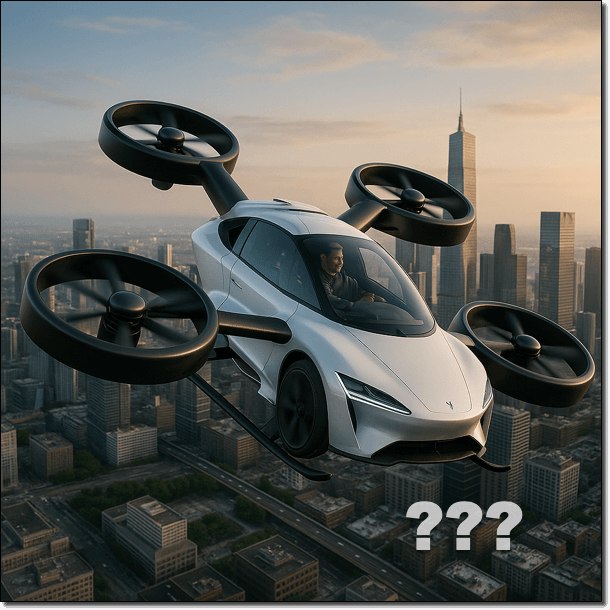
From gasoline-powered engines to electric vehicles, and from hand-cranked ignitions to self-parking systems, cars have changed dramatically in just over a century. And the road ahead promises even more transformation.
Smarter. Cleaner. Safer.
Here’s what you can expect in the coming years:
The future is moving away from fossil fuels — and fast.
Modern cars now include tech that can step in before you make a mistake:
These tools are powered by radar, sensors, and onboard computers that constantly scan the road for danger. Many of these are already available in today’s new cars — and standard in many models by law.
Inside the cabin, dashboards are changing too:
The driver’s seat is becoming a digital cockpit — with more automation every year.
Autonomous vehicles are no longer just science fiction. Tech companies and carmakers are developing fully self-driving vehicles that can navigate without human input.
While most experts agree that human drivers won’t disappear anytime soon, self-driving features like:
…are already on the road.
As a new driver, you’ll likely spend your driving years in vehicles that do more of the work for you — but understanding the technology and remaining alert will still be critical.
Knowing how your car thinks helps you drive smarter — and helps you adapt to what’s coming next.
 Reading the Road: Traffic Signs and What They Mean
Before you even read the words, the shape and color of a traffic sign can tell you what it’s about. As a new driver, recognizing these visual clues quickly will help you make smarter, faster decisions behind the wheel.
A red, octagon-shaped STOP sign always means:
A YIELD sign tells you to:
These signs help prevent head-on crashes:
Whenever you see a red circle with a slash, it means:
Stay alert around train tracks:
This sign signals:
These diamond-shaped signs alert you to potential hazards:
These are the rules of the road. You must follow them.
Examples include:
Ignoring these signs can result in citations or worse — an accident.
The DMV doesn’t just want you to memorize these for the written test — knowing what signs mean by shape and color helps you recognize and react faster, especially in high-pressure situations.
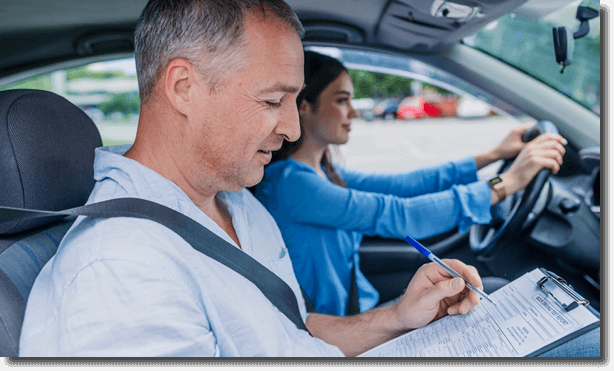 The California driving test isn’t just a formality — it’s your chance to show that you’re ready for real-world driving.
The DMV wants to know you can operate a vehicle safely, follow the rules, and stay calm under pressure.
You’ll drive on surface streets and may enter moderate traffic, depending on the test area.
Some students show up for the driving test without practicing enough — or practicing the right way. But the DMV test isn’t just about driving around the block. It’s about proving you can drive safely and confidently in real traffic, while following California’s rules of the road.
Your behind-the-wheel test takes about 20 minutes and is conducted by a licensed DMV examiner. They won’t trick you or try to confuse you — they’re just there to make sure you’re ready to be a safe, responsible driver.
You’ll be expected to perform several everyday driving tasks, including:
These actions aren’t just test material — they’re the foundation of safe driving.
The best way to get ready is to:
Relax and do your best. If you’ve studied the rules, practiced regularly, and stayed focused on safety, you’re already on the path to passing.
Some actions result in an immediate fail, such as:
Staying calm and focused is just as important as your technical driving skills.
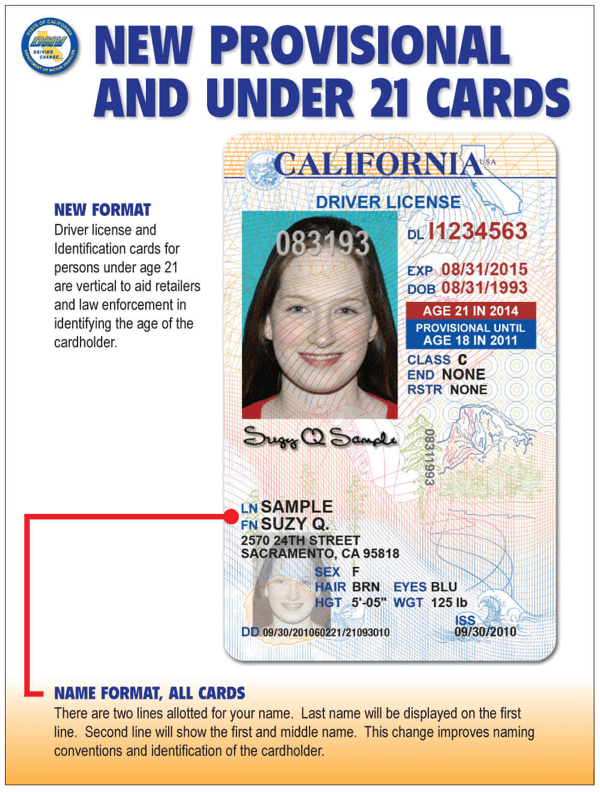 Driving is a Privilege — Not a Right
Before you ever start the car, it’s important to understand something essential:
Driving is not a right. It’s a privilege.
That means you have to earn it by showing you’re ready and responsible—and you can lose it just as easily if you break the rules.
A privilege is something granted to you because you’ve proven you can handle it. Think of it like a debit card: it has your name on it, but if you misuse it, the bank can take it away.
It’s the same with your California driver license. The DMV gives you the privilege to drive—but only if you demonstrate that you:
If you don’t? That license can be suspended or revoked.
The DMV can take your license away if you:
And the consequences can be steep—fines, court appearances, losing your license, and damaging your driving record.
When you get your license, people count on you—parents, friends, passengers, and other drivers. They expect you to:
If you’re under 18, your parents or legal guardians must sign your driver license application. That means they’re on the hook for your driving choices—and they’re trusting you to take that responsibility seriously.
Every time you get behind the wheel, you’re responsible for everyone in your car. They trust you to drive like it matters—because it does.
Earn it. Respect it. Keep the privilege.