Start by making a DMV Behind the Wheel appointment
After you have completed Driver.org Drivers Ed and have held your driving permit for 5 months, make your appointment. The DMV will only schedule 30 days in advance and appointments tend to fill up fast, so start early. Calculate the day you will become eligible and make an appointment on or after that date. You do not have to go to the same DMV office that gave you your permit, so look for available times at several nearby field offices if you can.
While you wait, read the DMV Parent-Teen Training guide and review the requirements below.
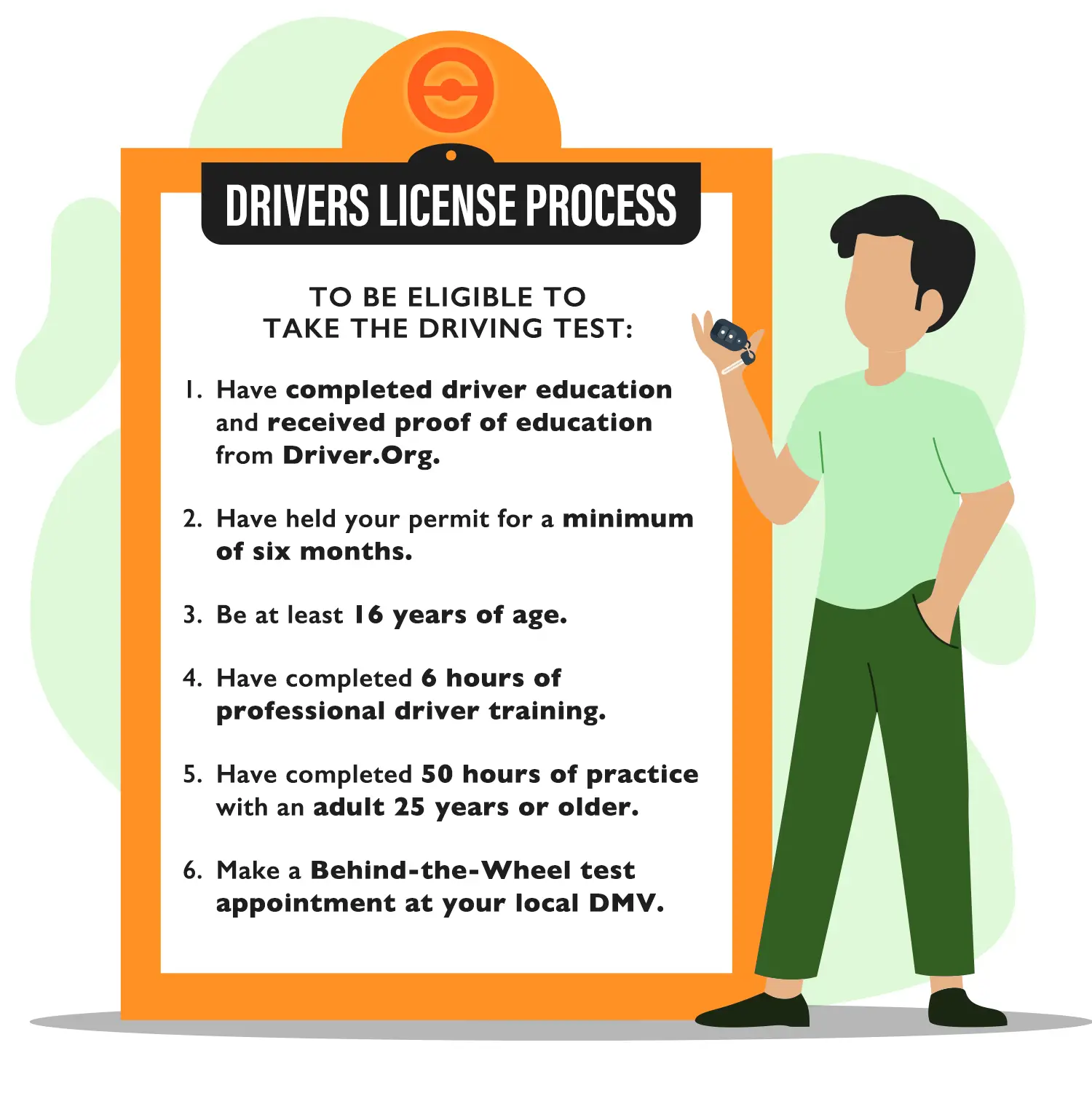
The documents that you’ll need to bring to your driving test include:
Be sure to wear your glasses or contacts, if you need them for driving, and bring any other items you need for driving as specified on your learner’s permit.
Be prepare and practice the following, they will be included in the driving test:
Left and right turns
Stops at controlled/uncontrolled intersections
Straight line backing
Lane change
Driving in regular street traffic
Driving on the freeway (if required)
Review the California Driver’s Handbook (DL 600) (PDF), Safe Driver Check List, videos, and sample tests. These tools provide detailed instructions on how to correctly perform the driving actions required on a drive test following laws, rules of the road, and safe driving practices.
If you’ve taken Drivers Ed with Driver.org and had the right amount of driving practice, you’ve got this! Be careful to always use your turn signals and observe speed limits and traffic signs. Get enough rest the night before taking the driving test, take your time, stay in the correct lane, and drive safely.
Here are the answers to a couple of the questions we hear the most from young drivers:
The 6 hours of professional driver training and 50 hours of practice driving with an adult will help you intuitively do things like wearing your safety belt and remembering to use your turn signals and obey speed limits and traffic signs. But even with all that driving experience, you might still have a few questions.
Do I have to read the DMV Handbook if I have taken Drivers Ed?
YES! You will need to download a copy of the California Driver Handbook and familiarize yourself with it if you haven’t already done this when practicing for your written test. The Handbook will give you all the information you need to be able to pass the written driver’s license test and pass the behind the wheel driving test with a DMV examiner.
Do you have to parallel park in a California driving test?
The good news for teen drivers (and drivers of any age who don’t have a lot of experience parking on busy city streets) is that parallel parking is NOT a requirement of your driving test. The most you will have to do is curbside parking — a similar technique, but much easier because it only requires pulling up alongside a curb, not a complex maneuver between two parked cars.
What happens after I pass the driving test?
After you pass your driving test you will be issued an interim license valid for 90 days until you receive your new photo license in the mail. Check your address before you leave DMV and tell the DMV representative if you have moved or if your address is incorrect. If you have not received your license after 60 days, call 1-800-777-0133 to check on the status. Have your interim license with you to provide information when requested.
If you fail your driving test, you must wait two weeks before you can take the test again. You have three chances to pass. Be sure to check with the California DMV for changes in laws and procedures.
Taking the driving test in California generally takes 20 minutes at the most, and sometimes as little as 10 minutes. We understand the anxiety that the CA behind the wheel driving test can inspire in young drivers, and we do our best to make sure you go into the test as prepared as possible so you pass the test the first time.